

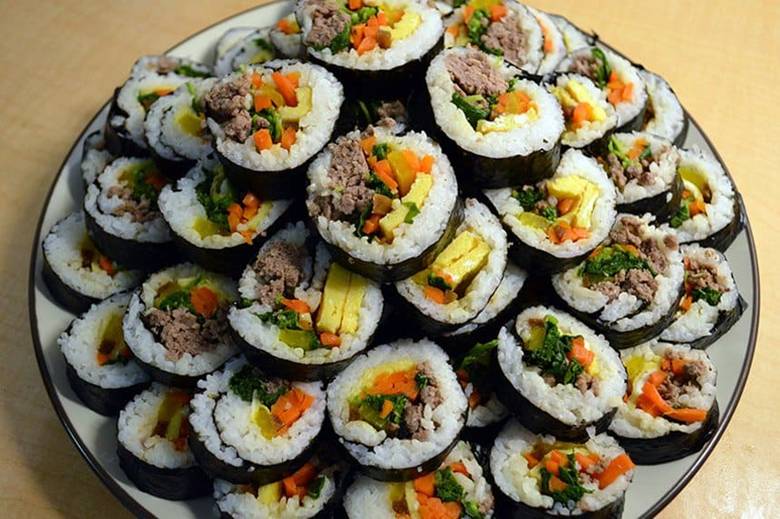
from Krista Kim-Bap
Kimbap is a delicious Korean dish made with rice, vegetables, and optional protein, all wrapped in seaweed. Here’s a classic recipe to make kimbap at home!
Ingredients
For the Rice:
2 cups short-grain rice
1 tablespoon sesame oil
1/2 teaspoon salt
For the Fillings (customize as desired):
1 cup spinach, blanched and seasoned with salt and sesame oil
1 carrot, julienned and lightly sautéed
4-5 strips of pickled radish (danmuji)
4-5 strips of burdock root (optional)
2-3 eggs, beaten and cooked into a thin omelet, then sliced into strips
4-5 strips of cooked meat (beef, ham or crab) or tofu for vegetarian option
For Wrapping:
5-6 sheets of dried seaweed (gim)
Directions
Prepare the Rice: Rinse the rice several times until the water runs clear. Soake the rice in water for about 30 minutes, then drain.
Cook the rice according to your rice cooker or stovetop method. Once cooked, let it cool slightly, then mix in sesame oil and salt. Set aside.
Prepare the Fillings:
Blanch the spinach in boiling water for about 30 seconds, then drain and squeeze out excess water. Season with salt and sesame oil.
Julienne the carrot and sauté it in a little oil until tender.
Prepare the omelet by beating the eggs, cooking them in a skillet, and slicing them into strips.
If using meat, cook it as desired and slice into strips.
Assemble the Kimbap:
Place a bamboo mat on a flat surface and lay a sheet of seaweed shiny side down.
Spread a thin layer of rice over the seaweed, leaving about 2 in. at the top edge.
Arrange your fillings in a line across the center of the rice. Be sure to distribute them evenly.
Roll the Kimbap:
Starting from the bottom, use the bamboo mat to roll the kimbap tightly away fromyou, pressing gently to keep the roll firm.
Once rolled, use a little water to seal the edge of the seaweed.
Slice and Serve:
Use a sharp knife to slice the kimbap into bite-sized pieces. Wipe the knife with a damp cloth between cuts to keep the edges clean.
Serve with pickled radish or soy sauce for dipping.
Variations
Vegetarian Kimbap: Omit meat and add more vegetables like cucumber, bell pepper or radish.
Tuna Kimbap: Substitute the meat with seasoned tuna for a different flavor.
Spicy Kimbap: Add gochujang (Korean chili paste) to the fillings for a spicy kick.
Nada’s Tips & Tricks: What’s the difference between sushi and kimbap besides one being Japanese and the other Korean?
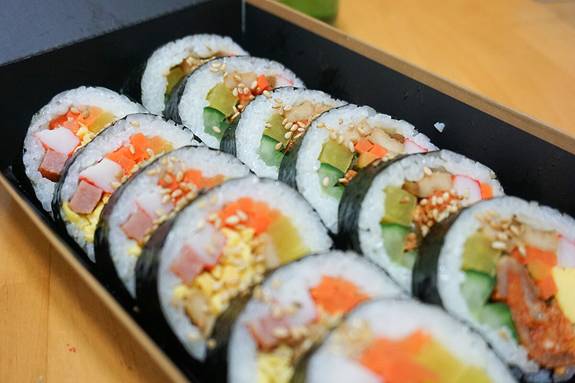
Kimbap (or gimbap) is a traditional Korean dish that translates to seaweed (kim) and rice (bap). The rice is seasoned with sesame oil and salt, so you pick up a hint of sweet sesame in each bite. Typical fillings don’t include raw fish, but processed meat, cheese, chopped omelet, beef, fishcake, and imitation crab. Classic veggies used include carrots, cucumbers, cabbage, spinach, and pickled radish. These rice rolls are wrapped in seaweed and sliced, and the final result is a colorful cross-section filled with salty, sweet, and sour flavors.
In contrast, sushi rice is made with vinegar, salt, and sugar, so it has a touch of acidity. In fact, sushi translates to “sour rice,” and contrary to popular belief, rice is the star of sushi, not raw fish. But of course, you’ll usually find raw fish in your sushi, along with fresh fillings like cucumber or avocado. Rolls are wrapped in seaweed and either topped with additional goodies like roe or sauce, or left plain. Due to the ingredients, sushi is best served fresh, while kimbap makes great takeaway.
Contents and images used with permission by Canadian Cookbooks.