

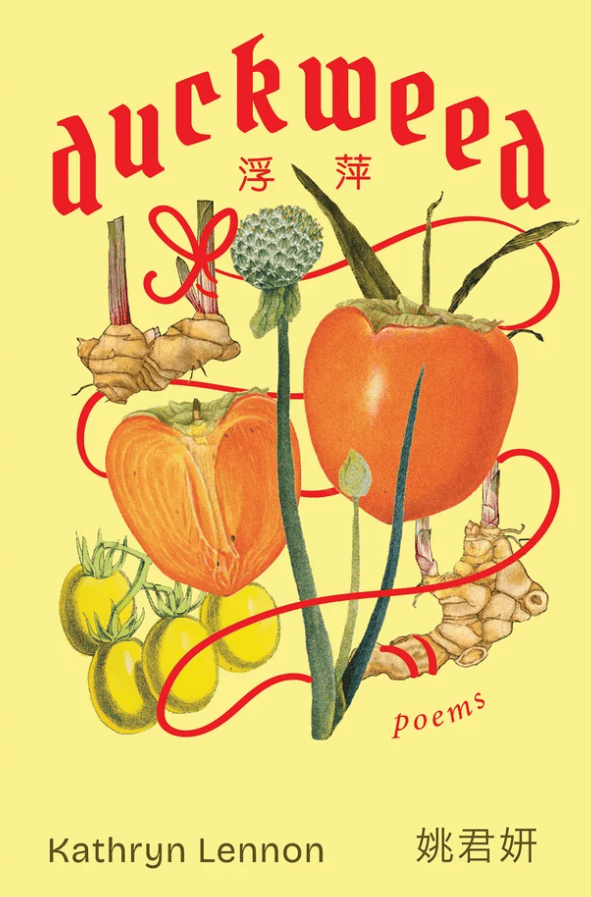
Some books invite you to read them from beginning to end. Others ask you to pause, reread, and sit with their words. Kathryn Lennon’s 浮萍 Duckweed belongs firmly in the second category. Lennon’s first full-length poetry collection is an intimate and thoughtful exploration of language, family, migration, cultural memory, food, and belonging. Kathryn 君妍 Lennon

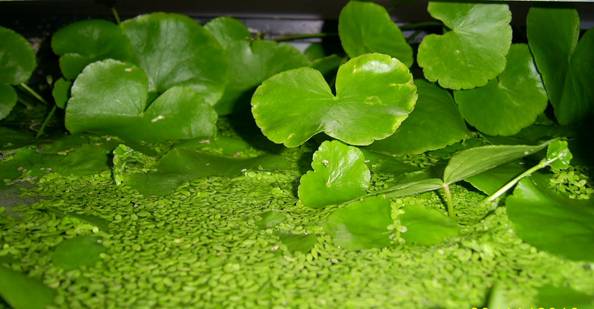
The title poem, Duckweed 浮萍, provides an evocative key to the collection. Duckweed floats on water, moving with currents rather than putting down deep roots. Lennon uses this image to explore a life shaped by movement, uncertainty, and questions of identity. The metaphor is particularly powerful because it resists the idea that belonging must always mean having a single, fixed home. Instead, Duckweed 浮萍 suggests that identity can be fluid, layered, and constantly changing. I find this particularly relatable having lived in 33 locations.
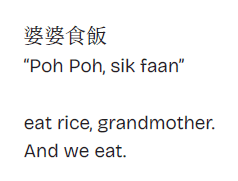
One of the collection’s greatest strengths is its treatment of language. Lennon writes openly about being connected to Cantonese and traditional Chinese characters while also feeling like an outsider because she is not fluent or literate in the language. This tension—between familiarity and distance—runs throughout the book. Poems such as Daughter Tongue Twister transform this linguistic struggle into something vivid and almost physical. Words become stuck in the mouth, caught between generations and between different versions of home.
Yet Duckweed 浮萍 is not simply a collection about linguistic loss. It is equally about the determination to recover, understand, and connect. Lennon’s speaker searches through family stories, kitchens, Chinatowns, old books, markets, landscapes, and memories for the pieces of a heritage that cannot be inherited in a straightforward way. The collection’s use of Cantonese, Chinese characters, Mandarin, Japanese, and Cree reinforces this sense of a world made up of overlapping languages and histories.
Food is another particularly memorable thread. The section Hundred Tastes on Your Tongue to Solve Your Homesickness includes poems with titles such as Recipes for Young Cooks, Chicken Egg Kid, Hunger is Inherited, and Recipes for New Mothers. Here, food becomes much more than nourishment: it is memory, family, ritual, inheritance, and a way of expressing love. With the Chinese Mid-Autumn & Moon Festivals in full swing, try our Rice Cake Stir Fry in the Recipe section. Then for dessert, have mooncakes on hand!

Lennon’s writing is at its most affecting when the personal and historical meet. Her poems move between intimate family experiences and larger questions surrounding colonialism, immigration, displacement, and the complicated histories of Asian communities in Canada. The result is a collection that feels both deeply personal and socially aware. Purchase the book at Kathryn 君妍 Lennon or win a copy in our Giveaway section.
Ultimately, Duckweed 浮萍 is a book about trying to find language for the spaces between identities. It does not offer easy answers about where we belong. Instead, it embraces uncertainty and makes that uncertainty beautiful. Lennon’s poetry reminds us that roots are not always visible, and that sometimes floating between places can itself become a form of belonging. For readers interested in poetry about family, culture, language, and the complicated meanings of home, Duckweed 浮萍 is a rewarding and resonant collection.
Content and images used with permission by NeWest Press. Duckweed 浮萍 – NeWest Press