from Everyone Hot Pot
Lucky Snacks for a Bountiful Finish
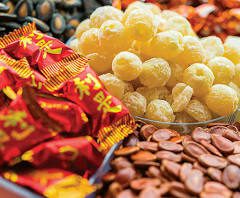
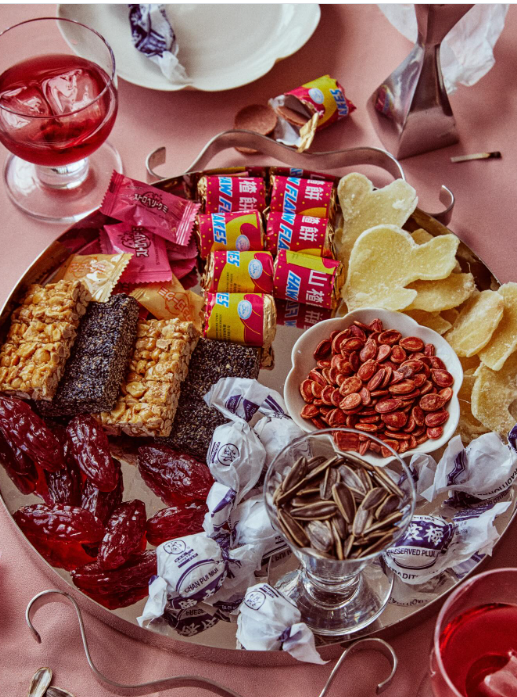
If you’ve ever rustled up dinner by combing through your fridge to build an impromptu snack plate, then this is the zero-stress hot pot finish for you. Tray of Togetherness is the traditional Chinese name given to the assortment of seeds, nuts, dried fruits, and candies that are arranged in a decorative lacquered red box during the Lunar New Year.
The treats symbolize various Chinese virtues and values (centering mostly on health, wealth, and family), and consumption of them throughout the two weeks of celebration is a strong way to begin the new year. The Tray of Togetherness can have compartments for six, eight, or nine different treats—all lucky numbers, of course.
Arrange the treats in small clusters on a large platter, cutting board, or in a partitioned box. Small bowls or cupcake liners can be used to compartmentalize the treats, but they’re not necessary. Look for a mixture of textures, flavors, and colors, aiming for at least a small handful of each item for a group of four diners.
DRIED OR CANDIED FRUITS
Apricots
Banana chips
Citrus peel
Dates
Jujubes
Papaya
Persimmons
Pineapple spears
Winter melon strips
ROASTED OR CANDIED NUTS AND SEEDS
Almonds
Cashews
Hazelnuts
Lotus seeds
Melon seeds
Nuts in their shell (look for walnuts, pecans, and pistachios)
Peanuts, roasted and in their shell
Pumpkin seeds
CANDY
Candied ginger
Chocolate coins or individual Rolos (or any candy symbolizing money or gold)
Ferrero Rocher
Fruit jellies (usually in flavors like white peach, muscat grape, and honeydew melon)
Haw flakes (sour wafers made with hawthorn fruit)
Sesame brittle
White Rabbit (a milky, chewy candy with an edible rice wrapper)
DEALER’S CHOICE
Granola bark
Leaf-attached mandarins
Mini marshmallows
Toasted coconut flakes
Whole kumquats
Nada’s Tips & Tricks: Change up the presentation depending on what is available in your area and what your guests will like. This is a Chinese New year charcuterie board so anything goes…but try to keep it as authentic as you can for a true Chinese experience. Here’s some interesting insights on the tradition:
Design: Traditionally, these containers are round or, more often, octagonal (8 being a lucky number symbolizing prosperity and growth) and decorated in red and gold.
Usage: They are displayed in homes to offer guests, allowing them to snack on, and symbolically “consume,” good luck.
Cultural Significance: This tradition dates back to the Ming Dynasty and represents a way of welcoming in the new year with hospitality and shared, auspicious, and sweet treats.